This Place is Taken

Tuesday, August 6, 2019

Out with section 370


By now all online media, and most of the western world, will have heard of India' government passing a new rule, abrogating one of its own, self imposed 'special status' clause to a state very much within its sovereignty. While those with prior knowledge of the history, present, and forthcoming future will , I think , rightly agree with this decision, a huge part of those ignorant are going to question if India has this right in the first place.

Short answer: No one knows either way. Political experts, pundits, and citizens of every country are debating both sides. Section 370, the just abrogated law, was not imposed by the UN, or any other country in India. It was designed by India's parliament. So India should have full power to decide when to take it off. That’s where my point of view ends.

But others more knowledgeable than me have spoken wisely on this matter. Change, however small , or even big as this, is good.

. Why not plebiscite?

Answer: Plebiscite is not for Article 370 but for annexation to Pakistan. The plebiscite, promised by once by Chacha Nehru (Greatness be unto him), could only be done, as per T&C, if Pakistan withdrew their troops totally and then India did, just keeping that part necessary to maintain order. Since the preconditions of Pakistan withdrawing from PoK will never happen, neither will the plebiscite. There is also that little moral problem I have that you do not get to do a plebiscite after demographic change, after communally picking out Hindu pandits and ejecting them from their homeland. Any plebiscite is rigged by default.

The power of abrogation of 370 comes to the current government from the people of India, Kashmir included, through our democratic institutions. You may say “this fascist Hitler is not my leader”, but unfortunately this is the way democracy works. Sorry.

Is this the right way forward. Any way forward from a logjam, is good. Will this help the people of the region ? Only time can tell.

Is this change good ?

I do not know, but it is worth a try. Because we have been “talking” for decades, and there has been very little to show for it.

Thursday, August 1, 2019

Virus - 2019 Malayalam movie


Working in healthcare is not easy. Healthcare profesisonals have always surprised me, and some of those moments have been the closest I have been to real 'miracle workers'. These folks, the work they do, actually saves lives. Working in healthcare is to dedicate one's life to a lifetime of service to others. And there will be days that service could be a personal sacrifice to the caregiver. There have been numerous stories , movies and tales of the heroism shown by doctors , nurses and paramedical officers.

Malayalam movie too finally got a movie which told a story of heroism. The movie is called Virus (2019), and it describes the events of the 2018 Nipah virus outbreak in Kerala, India. Although the event itself got wide media coverage in India and abroad, a detailed telling of the actual events has been missing till date. Here, one can finally get to see a near-reality replay of the events.

First of all, a fantastic cast. One of those rare Malayalam movies which has starpower, but no overbearing superstar syndrome. Spot on casting, every actor is apt for their characters. Every characther in the movie is based on on or more real life persons. Second, there is a hollywood like treatment to everything; the story, the cinematography, music, and dialogues. Edge of the seat tension grips the full movie, with a little bit of humour and hope sprinkled all over. The overall feeling is of optimism, and a call to come and work together in times of need.

The story picks up half way through the outbreak, and employs numerous flashbacks to connect the stories of all the characters involved. A fantastic approach, but I felt some flashbacks were not obvious; there were not enough pointers to convey the actual time of that story unfolding. Could have been a little more efficient. But the highlight is when the healthworkers come together to build the full chain of events , linking all of the victims together, starting from patient 0, to everyone affected during the outbreak. They do this by interviewing all the survivors, bystanders , hospital staff and random villagers. They also go through hours of CCTV footage, and even look at their social media and phone usage !

It is good to see malayalam movies again exploring the genre of real-life events, and telling real stories, of real people, instead of fantasy. Expecting more to come, but it should not take a virus outbreak to inspire movie makers.

Virus is streaming on Amazon prime now. Go watch it, before it incubates.

Wednesday, July 24, 2019

Michael Palin's Himalaya


Been reading the coffee table version of Michael Palin's travelouge: Himalaya. Finally got the time, when I fell ill, to read the majority of his 6 months journey from the west to the east of these ranges. Lots of pictures. These journeys are in a way a time capsule. Done over a decade and half ago, the same journey today would be a little more dangerous, and tiresome, given the recent geo-political tensions in the area. Michael, being British,and behalf of the BBC, had it a little more easy getting permissions, and approvals. He got to visit Tibet, and China, and still lived to tell the tale. Very few travellers get to see the other side of these mountains.


He brings with him a neutral, outsiders perspective during this journey. He does touch upon the political imbroglio of the region, but he also is not judgemental when he interacts with the locals, and see their traditions. Every community living in the mountains has a reverence for the ranges. Its not for the feeble minded. One has to be able bodied, to live along these slopes. I specially liked the Yunnan,China part of his travels. Here is a community who technically lived in the Himalaya, but addressed them in a different language, different names. They had their own culture, unique in their own way.


It is fascinating reading about the people who live so close to these mountains, and take the majestic views for granted. These are very seismically active regions, the Himalayas itself is the worlds youngest mountain range, having been created in the subduction zone of two tectonic plates. With only a few local airports, and no trains, they rely completely on roadways and rivers to get around. Weather conditions are extreme, and only a few kind of plants and vegetables grow. Over in Yunan, they consume a lot of meat to stay warm. But down in Nepal and Bhutan, with majority vegetarians, I wonder what they eat to beat the biting cold.


Living in relative comfort of modern cities, it is easy to take our lives for granted. Living in the Himalaya is not for the faint hearted. This has been an enriching read, and I hope one day of travelling in the mountains myself.

Monday, July 22, 2019

Heartbeats on the moon

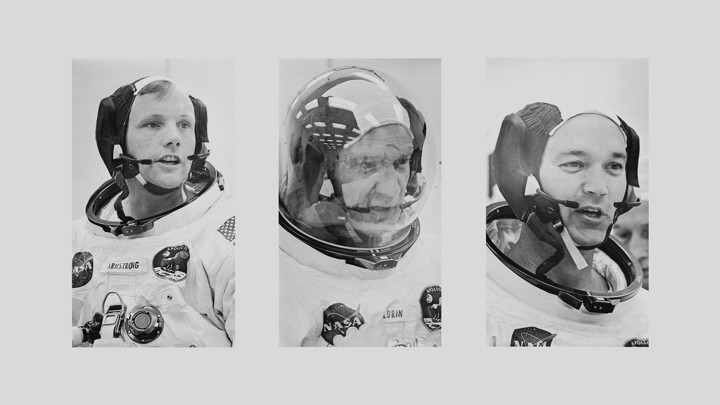
What wonderful times we live in. Around the world, media houses are covering the 50th anniversary of America's mankind's moon landing, and all sorts of wonderful articles are being published, detailing otherwise un-heard of stories and anecdotes of that historic week. One such article is regarding how mission control at Houston tracked and observed the hearbeats and life stats of the three men onboard. Fascinating read  !


Also, the journal of the entire mission is online, in public domain, for anyone to peruse and research forever. They are sometimes too technical, but are sprinkled with jokes and light ribbing between the crew and Mission Control, even in the midst of stressful moments.

Armstrong later said he wasn’t worried about the fuel. They were close enough then that if the engine cut off, the moon’s gentle gravity, one-sixth that of Earth’s, would let them coast safely down. But the descent must have been some adrenaline rush to push the lunar commander’s heart rate to 150. Armstrong’s pulse began to climb after he turned off the autopilot and took the controls in his gloved grip. The fate of the mission was, quite literally, in his hands. Tens of thousands of engineers had helped get him here, but this last bit was up to him. That kind of responsibility would quicken anyone’s pulse.


Saturday, July 20, 2019

50 years since the Giant Leap


Its been 50 years, since the giant leap of mankind. It was amazing knowing about the moonwalk the night it happened, its equally awe inspiring 5 decades later. Its going to inspire and challenge countless generations today and in the future.

Thank you, the gentle giants of the Apollo missions. And to all the scientists and engineers who worked on earth to make this happen.

We have left our footprints on the moon. May they stay there forever.


The world is still waiting for the next giant leap. Onto the next planet.

And to the universe far beyond.